
Packaging & printing guides
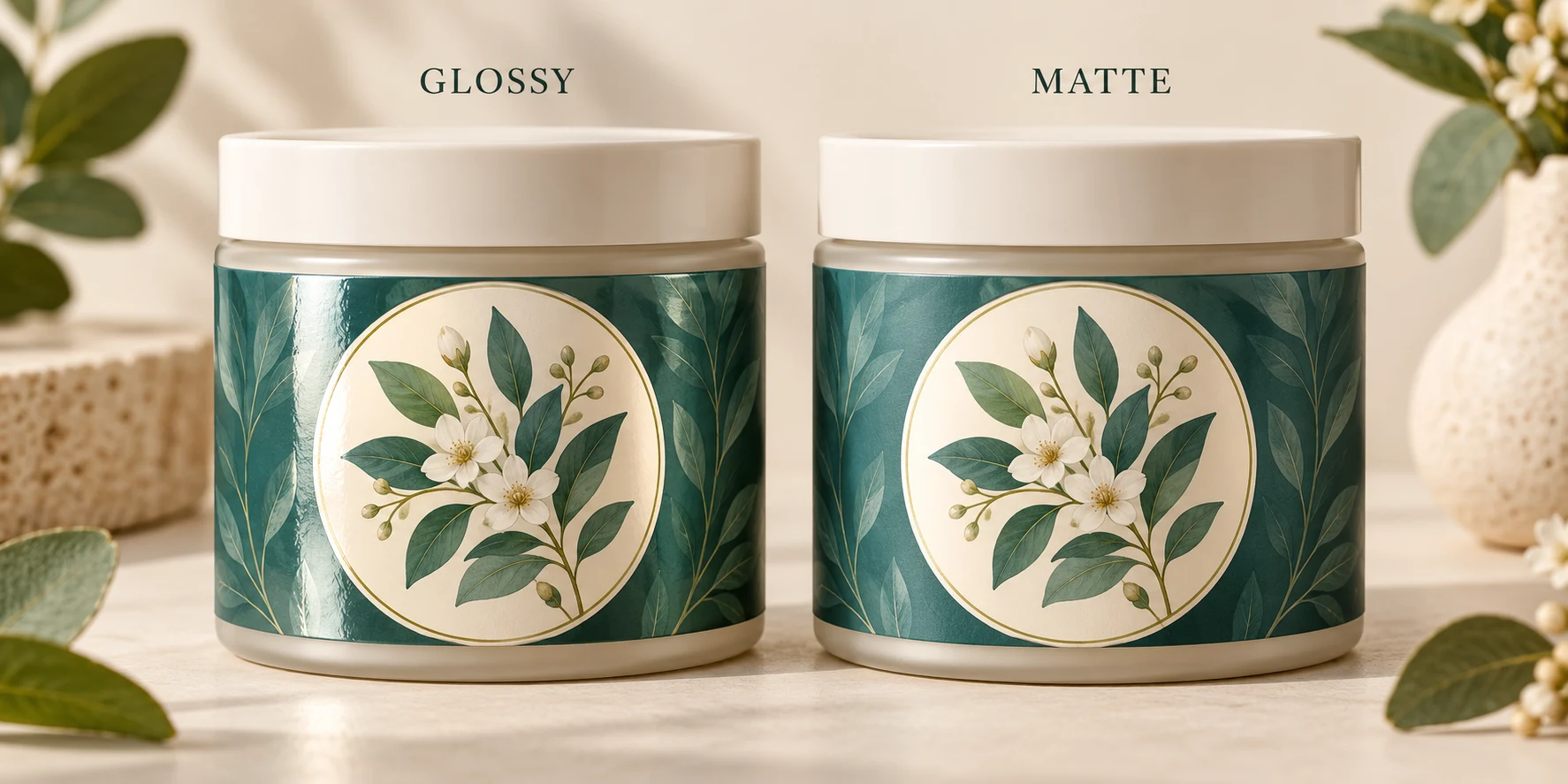
Glossy vs Matte Labels: Which Finish Fits Your Product?
A candy maker’s reorder shows why label finish is only part of durability. Jess explains how to choose material, adhesive and protection for your product.
A freeze-dried candy maker I work with came back with a very specific request: she wanted her original glossy lid labels again.
Those first labels had worked well for her. She liked how smoothly they went onto the lids, how bright they looked at her booth and how they held up through market season.
A later batch had a matte finish. In her experience, that batch didn’t handle the outdoor weather as well, and it didn’t apply to the lids quite as nicely. She used the labels, but when it was time to reorder, she asked me to quote the originals.
I’m keeping her business name private, but the question her reorder raised is one I hear all the time: should I choose glossy or matte?
My answer starts with where your product will live. Then we can talk about the look.
What this reorder tells us
For this customer, the original glossy labels were the better fit. That’s useful feedback about her actual packaging and selling conditions.
It doesn’t tell us that gloss was the only reason they performed better. Without comparing the material, adhesive and protective coating on both orders, I can’t pin the difference on finish alone.
That distinction matters when you’re spending money on a whole batch. I want to help you repeat what worked, with the right specifications behind it.
Glossy and matte describe the look, not the whole label
Gloss gives you a shiny appearance. Matte gives you a softer, less reflective appearance. Either can be part of a durable label, depending on its construction.
For example, Avery’s material guide includes waterproof films with both matte and glossy laminates, while its glossy paper is described for indoor applications. A shiny surface alone isn’t a promise that the label is waterproof. See Avery’s material examples.
When I’m helping you choose, I look at three parts together: the label material, the adhesive that holds it to your container and the coating or laminate protecting the print.
Ordering for outdoor markets, coolers or busy hands?
Tell me about those conditions before we pick a finish. Rain, condensation, oil and repeated handling are different challenges, and a label needs to suit the ones your product will actually face.
A film such as BOPP may be a useful starting point for moisture-exposed packaging, but the finished label still needs an appropriate adhesive, print system and protection. For cold storage, we also need to check both the temperature when the label goes on and the temperatures it will experience afterward. Avery Dennison explains these separate temperature requirements.
I like a simple reality check: try the proposed label on your actual container and put it through your normal routine. Pack it, handle it, open the lid and expose it to the conditions you expect. Check whether the print rubs, the edges lift or the label changes appearance.
Choose the finish that suits your brand
Once we have a construction that suits the job, the visual choice gets easier. I’d consider gloss when you want shine and a bright presentation. I’d consider matte when you want a quieter look or less reflection in product photos.
If you need to add a date, flavor or customer name by hand, tell me that too. Matte doesn’t automatically mean writable. The actual coating and pen matter, and some surfaces need more drying time. Test the pen you plan to use on a sample. Avery’s handwriting guidance shows how compatibility varies.
Three questions to answer before you reorder
- Where will the package go? Tell me about outdoor selling, cold storage, moisture, oil and handling.
- What needs to work on the container? Share the container material, usable label area and any handwriting needs.
- What worked last time? If you loved a previous order, send the order details and a photo so we can compare specifications.
My candy-making customer already knew which batch she preferred. The useful next step was to go back to that successful order, rather than assume any label marked “glossy” would give her the same result.
Let’s find the right label for yours
Know your size and quantity? Explore custom product label pricing at The Label Lady. The current builder lists printing and shipping as included.
Still figuring out the fit? Start with my free Label Size Recommender, then check the suggested size on your actual container.
And if you’re stuck between finishes, send me a photo and tell me where you sell your product. I’ll help you narrow it down.
Written by Jessica Trimm of URGrafix, Colville, Washington.